The Creatine Journal

Water weight · 3 min read

Creatine and water weight in women: bloat, the scale and your cycle

By the editorial team Updated 14 sources
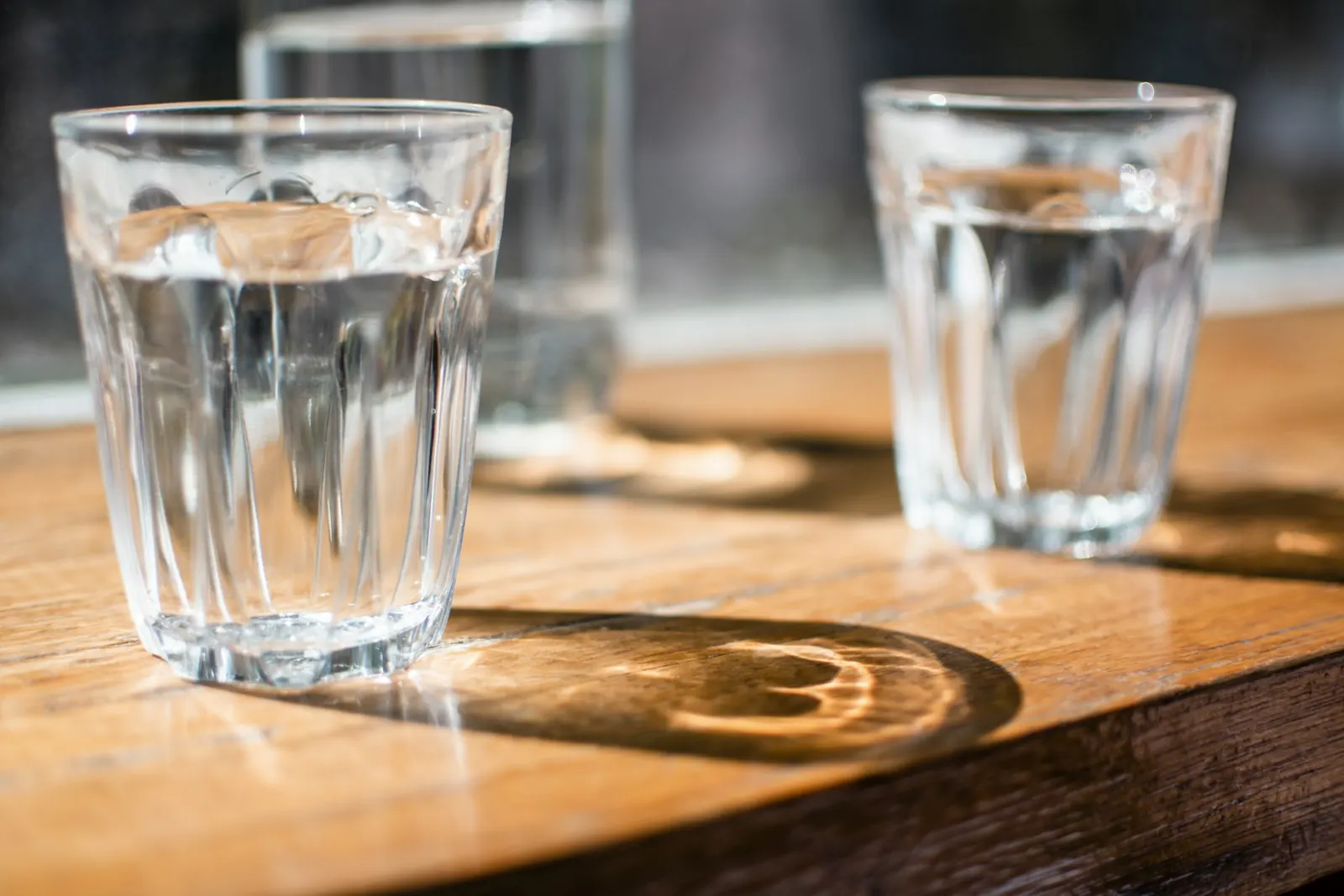
Glasses of water on a wooden table in warm sunlight.
Photo: Janosch Lino / Unsplash

Short answer

Creatine pulls water into your muscles, not under your skin. The scale jump people talk about mostly happens in the first week, if you start with a big "loading" dose. Women seem to gain less than men, and in several women-only studies the scale didn't move at all. Creatine doesn't add fat, and skipping the loading week is the easiest way to avoid the jump.

Key takeaways

  • The big scale jump happens in a high-dose loading week (1 to 3 kg, or about 2 to 7 lb, in men or mixed groups). In women it's smaller, or missing.1234
  • In the only study that looked at the menstrual cycle, loading in the week or two before a period added a little body water, but the scale didn't really move.5
  • The scale may go up a bit, but body fat doesn't. A big review of 143 studies found no change in fat.6
  • Skipping loading and splitting big doses means less water and less stomach trouble. Over two years, women on creatine had no more bloating than women on a dummy powder.78910
In this article
  1. Where does the water actually go?
  2. The loading week is the whole story
  3. Women gain less, and sometimes nothing
  4. What about your cycle?
  5. The scale versus body fat
  6. Does it dehydrate you or cause cramps?
  7. How to skip the jump
  8. What we don’t know yet

Where does the water actually go?

Here’s what most “creatine bloat” posts get wrong. The water doesn’t go to your ankles, your face or your waistband. Creatine gets pulled into your muscles along with sodium, and water follows it into the muscle cells.1

In a study of men who lifted, the extra water in their cells grew right along with their extra muscle.11 Water in the right place, doing its job.

So why do some people feel puffy? Usually it’s the loading week.

The loading week is the whole story

“Loading” means 20 g a day for 5 to 7 days, to fill your muscles fast. It usually adds 1 to 3 kg (about 2 to 7 lb), mostly water, and mostly in the first few days.1 Early studies measured about half a liter to a liter of extra fluid.12

But look at women, and the story changes.

Women gain less, and sometimes nothing

When researchers loaded men and women the same way, the men gained more.2 And in several studies with women, the scale barely moved:

  • College women, 5 days of loading, no exercise: their thigh muscles got stronger. Their weight and thigh size didn’t change.3
  • Young women lifting for 10 weeks: stronger, with more muscle than training alone, and no real difference in weight or body fat.413
  • Men and women on a small dose, about 2.3 g a day for 6 weeks: no change in weight or body water, and muscles that tired less easily.8
2-7 lbusual loading-week gain in men or mixed groups
0weight change in several women-only studies
~2 lbaverage gain across 143 studies, no fat

A 2021 review of creatine in women said fast weight gain “is more prevalent among males.”13 The direction is clear.
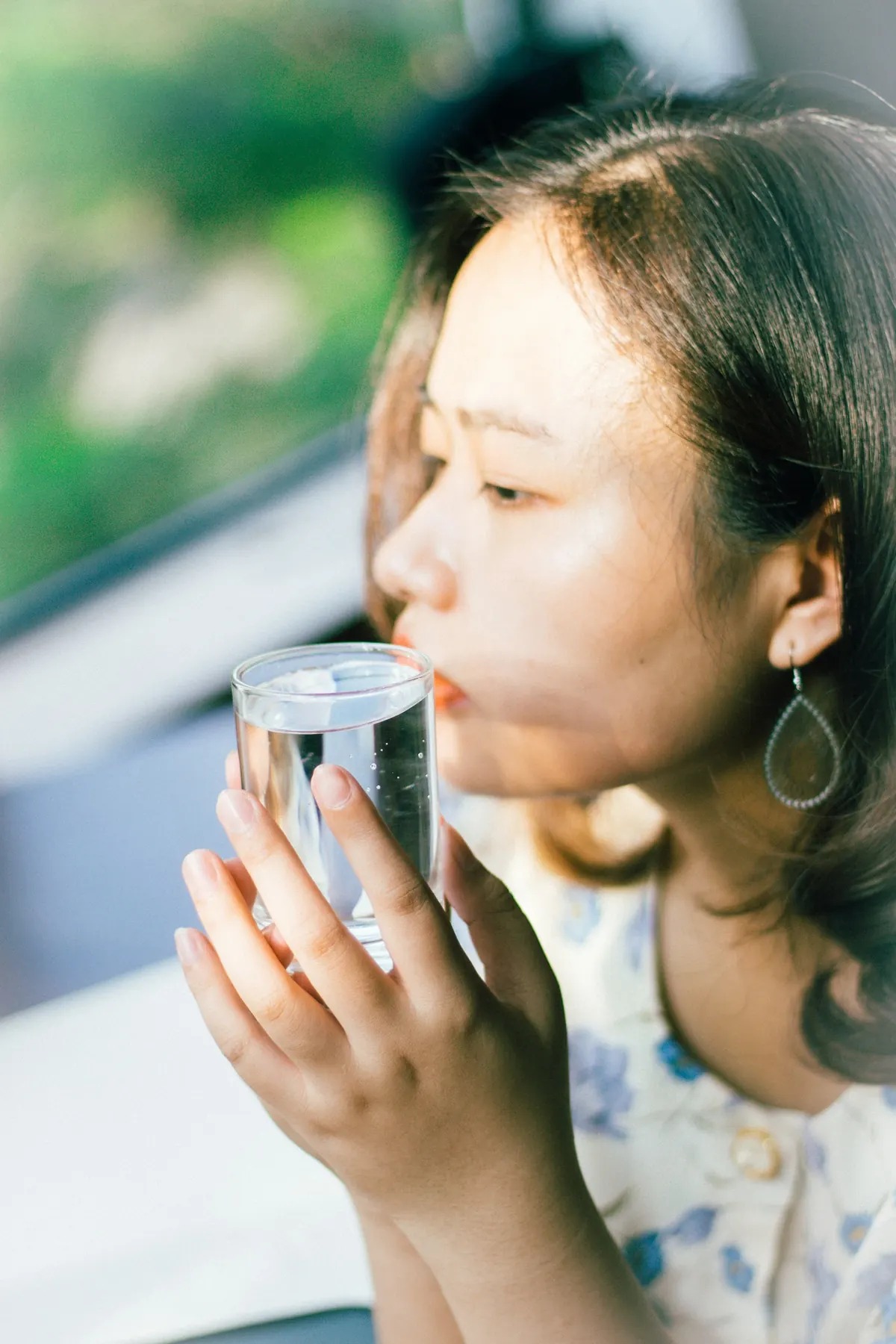
A woman sips a glass of water by a window.
The water creatine brings goes into your muscles, not under your skin.Photo: Ba Ba / Unsplash

What about your cycle?

Until 2023, nobody had tested it. In a proper trial, 30 active women took a 5-day loading dose of creatine or a dummy powder, twice: once in the first half of their cycle, and once in the week or two before their period, when many of us already feel puffy.5

Before their period, creatine added about 0.8 liters of body water (a bit less than a quart), compared with the dummy powder. Yet the scale didn’t really move.5 In the first half of the cycle, there was no difference at all, and women on the pill responded like everyone else.5

Two honest catches. The lab’s tools can be off by about 0.7 liters, close to the size of the effect. And these were women around 25 doing a loading week, not women in their 40s on a normal dose.5 A real signal, measured once.

The scale versus body fat

Here’s the number that matters. A big review combined 143 studies. On average, creatine added 0.86 kg (about 2 lb) on the scale, and body fat didn’t change at all. Body-fat percentage even dipped a tiny bit.6

The scale can go up while your body-fat percentage goes down. That's not a contradiction. It's muscle holding water.

Does it dehydrate you or cause cramps?

That reputation comes mostly from old surveys of athletes that didn’t account for dose or other supplements. In one, 91% of users took more than 5 g a day.1 Better studies point the other way. A review of 10 proper trials found “no evidence” that creatine hurts how your body handles heat or holds on to fluid.14 College football players training in the heat on creatine had fewer cramps than those who weren’t.1

And in a two-year study of 237 women after menopause, muscle cramps hit 2 women on creatine and 2 on the dummy powder.10 Not exactly an epidemic.

How to skip the jump

  • Skip loading. 3 g a day fills your muscles just as well. It takes about four weeks instead of six days.7
  • Split big doses. In male athletes, one 10 g dose gave more than half of them diarrhea. Two 5 g doses: about 3 in 10.9
  • Take it with a normal meal, not a giant carb drink, which one review calls “likely not the best strategy” for women.13

Worried about bloating? Over two years at about 10 g a day, women on creatine had no more stomach complaints, bloating included, than women on the dummy powder.10

What we don’t know yet

  • Women in their 30s to 50s: the cycle study was in young women. Nobody has tested perimenopause.
  • Everyday doses: the cycle study only tested a loading week.
  • Exact weight change for each sex: the men-versus-women study didn’t report it.2

Questions women ask

Will creatine make me look bloated or puffy?

The water creatine pulls in goes mostly into your muscle cells, not under your skin. In a two-year study of women after menopause, bloating and other stomach complaints were no more common on creatine than on a dummy powder. Most of the early gain people notice comes from a loading week.

How much weight will I gain from creatine?

A loading week of 20 g a day usually adds 1 to 3 kg (about 2 to 7 lb) in men or mixed groups, mostly water. Women tend to gain less, and several women-only studies found no change at all. Across 143 studies, the average gain was 0.86 kg (about 2 lb), with no change in fat.

Does creatine water weight go away?

The early jump usually settles, and longer studies mostly show no rise in total body water. If you stop, the creatine in your muscles drifts back to normal over about 30 days, and the water that came with it goes too.

Is it worse during my period or the week before?

In the one study that tested it, loading in the week or two before a period added about 0.8 liters of body water compared with a dummy powder. But body weight didn't really change. The study was in young women and only tested a 5-day loading phase.

Does creatine dehydrate you or cause cramps?

The research points the other way. A big review found no sign that creatine hurts how you handle heat or hold on to fluid. In a season-long study of football players training in the heat, the creatine users had fewer cramps. In the two-year women's study, cramps were equally rare with and without creatine.

How do I avoid the water weight?

Skip loading and take 3 to 5 g a day. Your muscles fill up over about four weeks instead of one. In one study, about 2.3 g a day for six weeks didn't change body weight or body water at all. Take it with a normal meal, not a giant carb drink.

Sources

  1. Antonio J et al. Common questions and misconceptions about creatine supplementation: what does the scientific evidence really show? J Int Soc Sports Nutr 2021;18(1):13. 10.1186/s12970-021-00412-w. pmc.ncbi.nlm.nih.gov/articles/PMC7871530/
  2. Mihic S, MacDonald JR, McKenzie S, Tarnopolsky MA. Acute creatine loading increases fat-free mass, but does not affect blood pressure, plasma creatinine, or CK activity in men and women. Med Sci Sports Exerc 2000;32(2):291–6. 10.1097/00005768-200002000-00007. pubmed.ncbi.nlm.nih.gov/10694109/
  3. Kambis KW, Pizzedaz SK. Short-term creatine supplementation improves maximum quadriceps contraction in women. Int J Sport Nutr Exerc Metab 2003;13(1):87–96. 10.1123/ijsnem.13.1.87. pubmed.ncbi.nlm.nih.gov/12660408/
  4. Vandenberghe K et al. Long-term creatine intake is beneficial to muscle performance during resistance training. J Appl Physiol 1997;83(6):2055–63. 10.1152/jappl.1997.83.6.2055. pubmed.ncbi.nlm.nih.gov/9390981/
  5. Moore SR, Gordon AN, Cabre HE, Hackney AC, Smith-Ryan AE. A Randomized Controlled Trial of Changes in Fluid Distribution across Menstrual Phases with Creatine Supplementation. Nutrients 2023;15(2):429. 10.3390/nu15020429. pmc.ncbi.nlm.nih.gov/articles/PMC9865497/
  6. Pashayee-Khamene F et al. Creatine supplementation protocols with or without training interventions on body composition: a GRADE-assessed systematic review and dose-response meta-analysis. J Int Soc Sports Nutr 2024;21(1):2380058. 10.1080/15502783.2024.2380058. pmc.ncbi.nlm.nih.gov/articles/PMC11268231/
  7. Hultman E, Söderlund K, Timmons JA, Cederblad G, Greenhaff PL. Muscle creatine loading in men. J Appl Physiol 1996;81(1):232–7. 10.1152/jappl.1996.81.1.232. pubmed.ncbi.nlm.nih.gov/8828669/
  8. Rawson ES, Stec MJ, Frederickson SJ, Miles MP. Low-dose creatine supplementation enhances fatigue resistance in the absence of weight gain. Nutrition 27(4):451–5 (e-published July 2010). 10.1016/j.nut.2010.04.001. pubmed.ncbi.nlm.nih.gov/20591625/
  9. Ostojic SM, Ahmetovic Z. Gastrointestinal distress after creatine supplementation in athletes: are side effects dose dependent? Res Sports Med 2008;16(1):15–22. 10.1080/15438620701693280. pubmed.ncbi.nlm.nih.gov/18373286/
  10. Chilibeck PD, Candow DG et al. A 2-yr Randomized Controlled Trial on Creatine Supplementation during Exercise for Postmenopausal Bone Health. Med Sci Sports Exerc 2023;55(10):1750–1760. 10.1249/MSS.0000000000003202. pmc.ncbi.nlm.nih.gov/articles/PMC10487398/
  11. Ribeiro AS et al. Creatine Supplementation Does Not Influence the Ratio Between Intracellular Water and Skeletal Muscle Mass in Resistance-Trained Men. Int J Sport Nutr Exerc Metab 2020;30(6):405–411. 10.1123/ijsnem.2020-0080. doi.org/10.1123/ijsnem.2020-0080
  12. Kreider RB et al. International Society of Sports Nutrition position stand: safety and efficacy of creatine supplementation in exercise, sport, and medicine. J Int Soc Sports Nutr 2017;14:18. 10.1186/s12970-017-0173-z. pmc.ncbi.nlm.nih.gov/articles/PMC5469049/
  13. Smith-Ryan AE, Cabre HE, Eckerson JM, Candow DG. Creatine Supplementation in Women's Health: A Lifespan Perspective. Nutrients 2021;13(3):877. 10.3390/nu13030877. pmc.ncbi.nlm.nih.gov/articles/PMC7998865/
  14. Lopez RM et al. Does creatine supplementation hinder exercise heat tolerance or hydration status? A systematic review with meta-analyses. J Athl Train 2009;44(2):215–23. 10.4085/1062-6050-44.2.215. pmc.ncbi.nlm.nih.gov/articles/PMC2657025/

Read next